
Pelletized Activated Carbon for Gas Treatment: What to Confirm Before You Order
When pelletized activated carbon suits a gas adsorber, how it compares with granular and honeycomb carbon, and what diameter, activity and duty data to send.
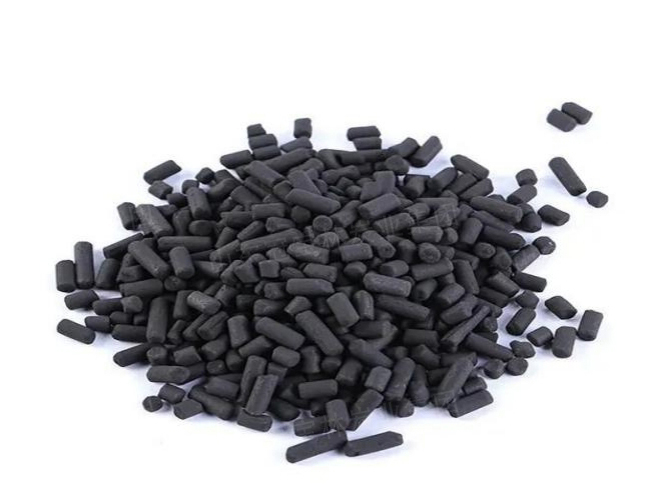
A purchase inquiry that gives only a pellet diameter and a quantity does not identify which grade fits the duty. A coal-based pellet intended for a solvent-recovery bed may differ from a coconut-shell pellet intended for an odour adsorber, even when both have the same diameter.
This article covers what to confirm before requesting a quote for pelletized activated carbon for gas-phase work, and when crushed granular or honeycomb carbon may be the better buy.
What is pelletized activated carbon, and how is it made?
It is a cylindrical carbon, extruded from a powdered feedstock, then carbonized and activated. That forming step is what makes it a pellet, not a crushed granule.
On the Pelletized Activated Carbon for Gas and Water Treatment page, the listed bases are coal powder, wood-based material, coconut shell or similar feedstocks. The powder is mixed and extruded into cylinders; carbonization and activation come after forming. The published advantages are high adsorption performance, low flow resistance and high strength. Treat the resistance claim as a listed product point, not as a ranking against granular or honeycomb carbon under a shared duty.
Check that sequence on any quotation. Conventional coconut-shell GAC is made from shell-derived carbon and crushed and screened, rather than extruded from powder. If a seller writes "coconut pellet," ask whether they mean an extruded pellet made from coconut-shell powder, or crushed coconut granules. For the crushed form, see the coconut shell granular activated carbon page.
When should you use pelletized carbon rather than granular or honeycomb?
Consider pelletized carbon for a packed-bed gas adsorber when a uniform cylindrical form suits the vessel design. Do not assume it will always show lower flow resistance than irregular granules, or a higher pressure drop than a honeycomb block.
| Point of comparison | Pelletized activated carbon | Crushed granular carbon | Honeycomb activated carbon |
|---|---|---|---|
| Form | Extruded cylinders | Irregular granules, screened to a mesh range | Blocks with straight channels |
| Flow resistance | Depends on pellet size, bed depth, gas velocity and packing; request a pressure-drop curve. | Depends on mesh size, bed depth, gas velocity and packing; compare at the same duty. | Depends on channel geometry, block depth and gas velocity; confirm using supplier data. |
| Carbon mass in a given vessel | Calculate from bulk density and usable bed volume. | Calculate from bulk density and usable bed volume. | Confirm carbon content, block density and channel volume; block mass alone is not necessarily carbon mass. |
| Applications to assess | Packed-bed gas adsorbers and some liquid towers | Water filters and gas or liquid beds | High-airflow VOC or odour treatment, subject to duty and design |
Particle size, bed geometry, flow rate and bulk density all affect the result. Use the table as a starting point, then compare supplier pressure-drop and density data at the same operating conditions.
If fan pressure is tight and air volume is large, honeycomb carbon for VOC exhaust is an option to evaluate against contaminant concentration and required carbon mass. For an existing backwashing water filter designed for crushed coal-based GAC or coconut shell GAC, check the media specification before considering pellets. Liquid-phase adsorption and water treatment are listed applications on the pellet product page, but a pellet is not a drop-in replacement for every granular grade.
Which pellet specifications should go on the purchase order?
Agree the diameter, feedstock, relevant gas-phase activity test, and strength or dust limits as acceptance criteria, rather than relying only on typical values.
Diameter has to match the vessel and allowable pressure drop. Do not assume a supplier's standard pellet is the size on your drawings. Ask about length distribution and breakage during handling as well.
Feedstock influences pore structure along with activation conditions. Coal, wood and coconut shell are listed bases. State the gas you need to treat, then discuss the grade. The product page does not publish a single iodine or CTC range covering every pellet.
Activity for gas-phase use should not rest on iodine number alone. Iodine number is measured using a liquid-phase test and does not describe vapour adsorption by itself. Ask which gas-phase method is reported, such as CTC, butane activity or a relevant solvent test, and name the method on the purchase order. The note on how to read an activated carbon spec sheet explains typical versus guaranteed figures.
Strength, dust and moisture should also be stated. Ask how hardness or crush strength is measured, and what undersize or dust limit applies after screening and handling. Keep packaging sealed until use and follow the supplier's storage instructions.
What duty data should you send with the inquiry?
Send gas flow, contaminants and concentrations, temperature, humidity, dust load, vessel size and the pressure-drop limit. These let a supplier assess suitability rather than quote on diameter alone.
Gas flow at normal operation and peak, with units and reference conditions
Contaminant composition and inlet concentrations; measured data where available
Operating temperature and variation at the bed
Humidity and any cooling or drying before the carbon
Dust or mist and existing pre-filtration
Outlet emission limit or odour target
Vessel diameter, bed depth and loading or unloading arrangement
If the unit includes solvent recovery or desorption, state the regeneration method and operating cycle. The carbon needs evaluation for that repeated duty, not only for initial adsorption. See Activated Carbon Air Filter Working Principle for more on bed loading and breakthrough.
What should the first inquiry include?
Gas or liquid duty and the main contaminants
Flow, temperature, humidity and dust
Vessel dimensions and pressure-drop limit
Pellet diameter if already fixed, or a note that selection is open
Feedstock preference and the activity test required on the COA
Quantity, packaging, destination and delivery window
Send these through the contact page. Include the vessel data and target specification so a proposed grade can be assessed against stated requirements.
What else should you ask before you order pelletized carbon?
What is the difference between pelletized and granular activated carbon?
Pelletized carbon is extruded into cylinders, then carbonized and activated. Crushed granular carbon is screened into irregular particles. Whether a pellet grade gives a lower pressure drop depends on size, bed depth and gas velocity; request curves for the same duty.
Which feedstock should I specify: coal, wood or coconut shell?
Start with the duty, not feedstock alone. Coal, wood and coconut shell are listed bases on the pellet product page. Send any existing plant standard so the proposed grade can be checked against it.
Is iodine number enough to specify a gas-treatment pellet?
Not on its own. Iodine number is a liquid-phase test. For a gas adsorber, ask for a relevant gas-phase activity test as well, and name its method and acceptance value on the COA.
Can spent pelletized carbon be regenerated?
It may be possible, but suitability depends on the adsorbed contaminants, condition of the carbon and treatment process. Start with a sample or contaminant list. The spent activated carbon regeneration services page describes industrial regeneration work; whether a particular pelletized lot is suitable needs separate review. See also Spent Activated Carbon: Regeneration Service or On-Site Equipment?.
Do you publish a standard pellet diameter and CTC range?
The product page does not list one diameter and CTC range for all grades. Ask for a written specification for the proposed product, including the test methods and agreed acceptance limits.
Previous: None
Next: None