
GAC Regeneration Furnace: What to Define Before Requesting a Quote
What to send before asking for a GAC regeneration furnace quote: spent carbon type, adsorbed load, moisture, true daily tonnage, steam, fuel and exhaust limits.
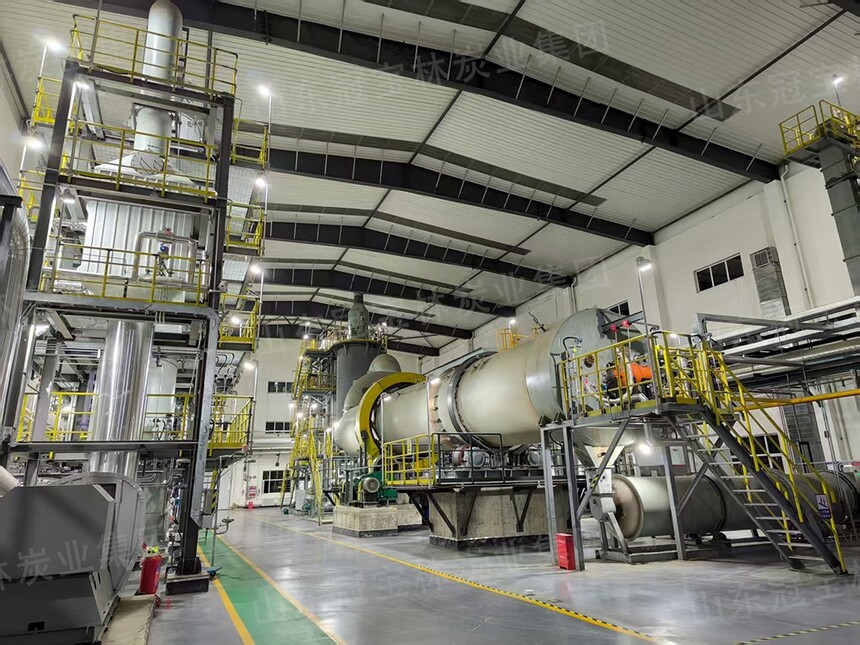
Most regeneration furnace inquiries we receive give one number: tonnes per day. That number matters, but on its own it tells us very little. A furnace that regenerates 10 t/day of carbon from a drinking-water plant is a different machine, in practice, from one handling 10 t/day of wet carbon loaded with solvents from a chemical site.
This article covers what we ask for before sizing a granular activated carbon (GAC) regeneration system. If you send it with your first email, the first quotation will be close to the one you sign.
What does a GAC regeneration furnace actually do?
It heats spent granular carbon to high temperature, drives off and breaks down what the carbon has adsorbed, then uses steam to clear the pores. The carbon goes back into service instead of to disposal.
Our Granular Activated Carbon Regeneration System is internally heated and uses metered steam. The published figures are 5–50 t/day capacity and a dry-basis yield of at least 90%, excluding adsorbed impurities. Listed duties are carbon from general solid-waste, hazardous-waste and online process streams.
That yield figure is worth reading carefully. It is calculated on dry carbon with the adsorbed load taken out. If you compare it with a supplier who quotes yield on wet, loaded carbon, the numbers won't line up.
Is it granular, powdered or activated coke?
Confirm the form first, because each one goes to a different machine. Granular carbon, powdered carbon and activated coke behave differently in a kiln, and we build a separate system for each.
| Spent material | Our system | Published capacity |
|---|---|---|
| Granular activated carbon | GAC Regeneration System | 5–50 t/day |
| Powdered activated carbon | PAC Regeneration System | 5–30 t/day |
| Activated coke from adsorption beds | Activated Coke Regeneration System | 5–20 t/day |
If your plant uses PAC, our earlier note on PAC regeneration equipment is the better starting point.
What has the carbon adsorbed?
This is the question that decides the off-gas design. Tell us the main contaminants and, if you know them, the approximate loading.
Organic solvents, phenols, dyes and general organics desorb and crack in the kiln. The gas they produce has to be burned or treated. Chlorinated compounds, sulfur, mercury or heavy metals change the exhaust train and sometimes the materials of construction. We would rather know about them at the inquiry stage than after the drawings are done.
Integrated exhaust treatment can be included in our scope. It is an option, not something in every package by default, so say whether you need it and which emission limits apply at your site.
How wet is the spent carbon, and how is it delivered?
Moisture changes the heat duty more than most buyers expect. Carbon drained from a filter can carry a lot of water, and all of it has to be evaporated before regeneration starts.
Tell us:
Typical moisture content, or at least whether the carbon arrives drained, dewatered or dry
How it reaches the furnace: bags, bulk bags, hopper or slurry transfer from the adsorbers
Particle size (mesh range) and the original carbon type, for example coal-based or coconut shell
If moisture is high, a separate pre-dryer may be the cheaper choice. Our rotary dryer note explains when that makes sense.
What daily tonnage do you really need?
Size on the spent carbon you actually produce, plus a margin, and say whether the figure is wet or dry. "20 tonnes" can mean 20 t of wet carbon per day, or 20 t of dry regenerated carbon. The difference can move the design by a full size.
Also tell us how the carbon arrives over the year. A plant that changes out one big adsorber every few months needs storage and a steady feed rate. It doesn't need a furnace sized for the change-out day.
Which utilities and site limits should you send?
Send fuel type, available steam (or water for raising it), power supply, the space for the line, and your local emission limits.
The furnace needs steam for the reactivation step. If your site already has steam, tell us the pressure and how much is spare. Fuel choice affects burner design and running cost, so name what is cheap and reliable at your location.
Should you buy a furnace or use a regeneration service?
If you are in China and the volume is modest, a service may cost less. Outside China, or with steady high volumes, on-site equipment is usually the practical route.
We do both. Our Xinjiang base runs spent carbon regeneration services, and we manufacture the furnaces for on-site use. We compared the two routes in GAC Regeneration Service vs On-Site Equipment, and the activated carbon regeneration guide covers the process step by step.
What to include in your first email
Carbon form, original type and mesh size
Main adsorbed contaminants and approximate loading
Moisture and delivery method
Daily tonnage, stated as wet or dry, and the annual pattern
Fuel, steam, power and space available
Emission limits, and whether exhaust treatment is in our scope
Destination country and project stage
Send these through our contact page. If the data is complete, we come back with a proposal. If not, we list the questions still open. A spent carbon sample for testing is the fastest way to firm up the design; our pilot testing service covers that step.
FAQ
What capacity range does the GAC regeneration system cover?
The published range is 5–50 t/day. Where your project sits depends on whether your figure is wet spent carbon or dry regenerated carbon.
What yield can I expect after regeneration?
The published figure is at least 90% on a dry basis, excluding adsorbed impurities. Actual loss depends on the carbon and what it adsorbed, which a sample test will show.
Is exhaust gas treatment included?
It can be. Integrated exhaust treatment is an optional scope item, so confirm it and your emission limits in the inquiry.
Can one furnace regenerate both granular and powdered carbon?
We don't recommend it. Granular carbon, powdered carbon and activated coke each have their own system because they handle and heat differently.
Can hazardous-waste carbon be regenerated?
Hazardous-waste streams are among the listed applications. The contaminants decide the exhaust design and the permits you need, so name them early.
Previous: None
Next: None