
Rotary Dryers for Wet Activated Carbon: What to Define Before Requesting a Quote
Drying wet activated carbon, sludge or biomass? Learn which moisture, capacity, heating, exhaust and product-quality details to define before requesting a rotary dryer quotation.
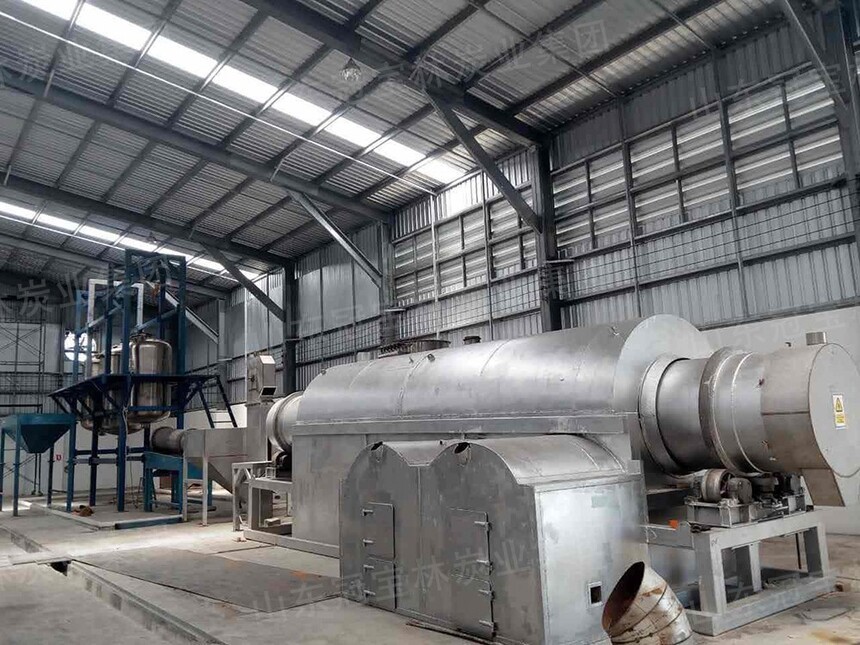
Drying is often treated as a minor step in an activated carbon plant, but it affects almost everything around it. Wet carbon from washing, wet biomass before carbonization, or sludge on its way to treatment all carry water that has to be removed before the next stage can run steadily. A dryer that is sized only on "tonnes per hour" can leave the downstream kiln, packing line or storage struggling with feed that is too wet, too dusty or too variable.
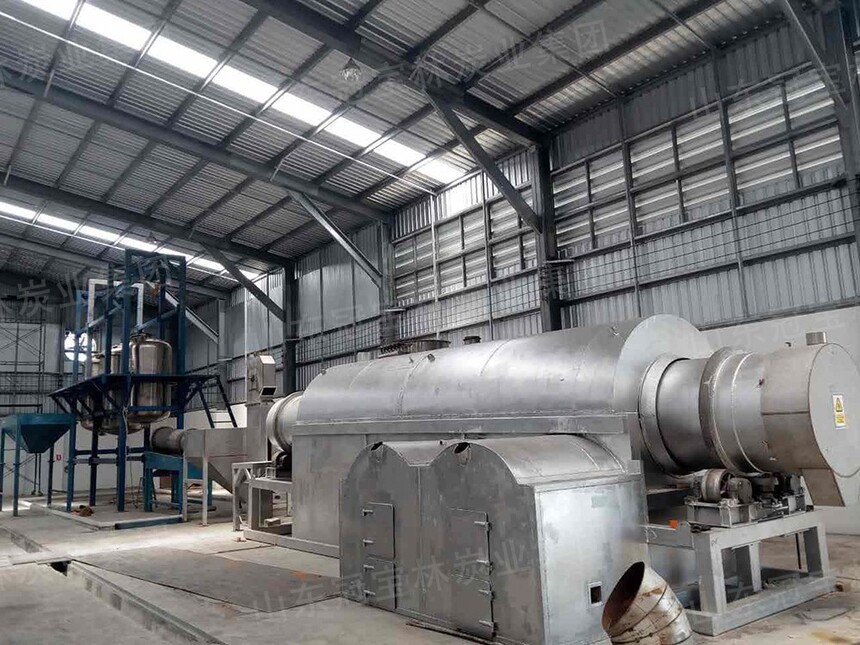
This note sets out what a carbon producer, regeneration plant or process contractor should define before asking for a rotary dryer, and how to read the figures published for Guanbaolin's Rotary Dryer for Wet Carbon and Process Materials.
1. Describe the material, not just its name
"Wet activated carbon" can mean very different things: acid-washed granular carbon, powdered carbon filter cake, or carbon recovered from a regeneration line. The same is true of biomass and sludge. For a useful review, describe:
What the material is and where in the process it comes from
Particle size or form (granular, powder, pellet, fibre, cake)
Whether it is sticky, abrasive, friable or prone to dusting when dry
Any residues it carries, such as acids, salts, organics or odour
These points influence the choice of heating arrangement, internal flights, sealing and dust handling more than the material name alone.
2. State the inlet and target moisture
Guanbaolin's product page lists an applicable feed moisture of 20%–70% for the rotary dryer. Within that range, the moisture you start with and the moisture you need at discharge decide how much water the dryer actually evaporates, which in turn drives heat demand and equipment size.
When requesting a quotation, give:
Typical inlet moisture and the range you expect across seasons or batches
The moisture basis (wet basis or dry basis) used in your measurements
The target outlet moisture and why it matters downstream (kiln feed, packing, sale specification)
If moisture varies widely, say so. A dryer selected for an average value can be under-sized on the wettest days.
3. Define capacity on a clear basis
The published single-unit capacity for the rotary dryer is 0.5–50 t/h, with continuous 24-hour operation. Before comparing proposals, agree whether capacity refers to wet feed entering the dryer or dry product leaving it. With feed moisture anywhere between 20% and 70%, the difference between those two figures can be large.
Also state your operating pattern: continuous three-shift operation, campaign drying, or a line that has to follow a kiln or filter press upstream.
4. Choose between direct and indirect heating
Guanbaolin describes two arrangements: direct heating inside the kiln, or indirect heating outside it, both combined with rotary material movement for even heating. The right choice depends on the material and the site:
Direct (internal) heating brings hot gas into contact with the material. Buyers should consider whether combustion gas contact is acceptable for the product and how dust is carried into the exhaust.
Indirect (external) heating keeps the heating medium separate from the material. This is worth discussing where contact with combustion gas is a concern, or where the off-gas from the material itself needs to be kept separate.
Tell the supplier which heat sources are available on site, such as natural gas, steam, waste heat from a kiln, or combustible gas from a carbonization line. Using heat that the plant already produces can change the economics of the whole line.
5. Include exhaust treatment in the scope
Drying wet carbon, sludge or biomass releases water vapour together with dust and, depending on the material, odour or volatile compounds. The product page describes closed exhaust treatment designed to meet emission standards. When requesting a quote, provide the local emission requirements that apply to your site and say which treatment steps you expect to be included in the supply scope, so that proposals can be compared on the same basis.
6. Protect product quality
For activated carbon, the dryer should remove water without damaging the product you have already paid to activate. Discuss:
Acceptable fines generation and how fines are collected
Maximum product temperature, especially for carbon that will be packed directly
Whether the dried product needs cooling before storage or packing
7. Send the site information
Guanbaolin's technical review asks for the application or feedstock, required capacity or quantity, target specification, available utilities, destination and project stage. For a dryer, it also helps to include the available footprint, how the material arrives (conveyor, screw, filter press, batch loading) and where the dried material goes next.
Summary checklist
Before requesting a rotary dryer quotation, prepare:
Material description, form and handling behaviour
Inlet moisture range, moisture basis and target outlet moisture
Capacity basis (wet feed or dry product) and operating pattern
Preferred heating arrangement and available heat sources
Emission requirements and expected exhaust-treatment scope
Product-quality limits: fines, temperature, cooling
Site utilities, footprint, upstream and downstream equipment, destination
With these details, a rotary dryer proposal can be checked against your real operating conditions instead of a single capacity figure.
For a technical review of a drying requirement for wet activated carbon, biomass, sludge or other process materials, contact Guanbaolin at Vincentlee@gblcarbon.com or +86 133 5532 9772, or see the Rotary Dryer for Wet Carbon and Process Materials product page: https://www.gblcarbon.com/rotary-drying-kilns/14.html
Previous: None
Next: None