
Powdered Activated Carbon Regeneration Equipment: What to Define Before Requesting a Quote
Planning to regenerate spent powdered activated carbon? Learn which feed, moisture, heat-source, capacity and exhaust details to define before requesting a PAC regeneration equipment quote.
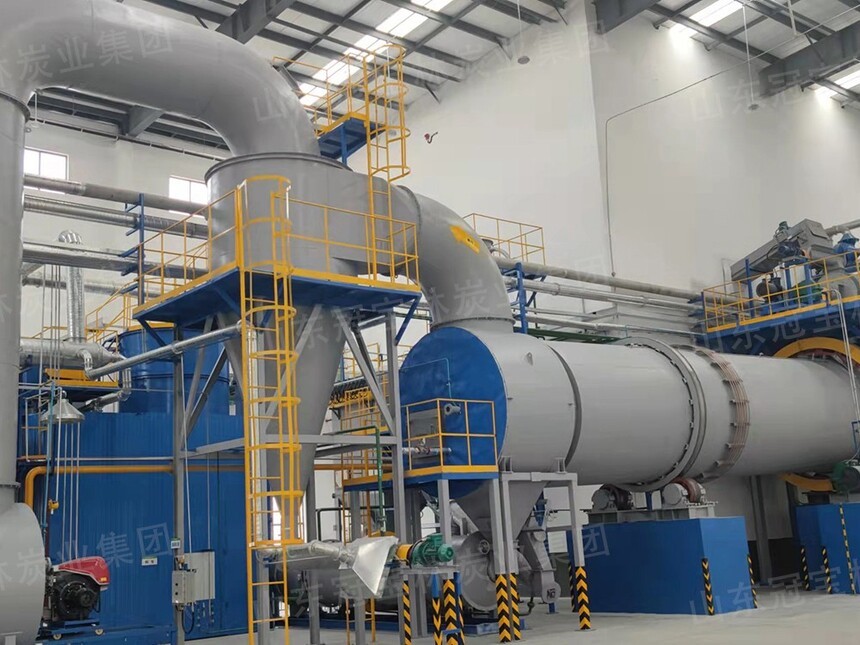
Spent powdered activated carbon (PAC) is harder to handle than spent granular carbon. It usually arrives wet, often as a filter cake or sludge, it carries whatever the process removed, and its fine particle size changes how it moves through a furnace and how much is lost to the exhaust. That is why a PAC regeneration quotation that starts with "how many tonnes per day?" rarely gets far. Capacity matters, but it only makes sense once the feed, the heat source and the discharge requirements are clear.
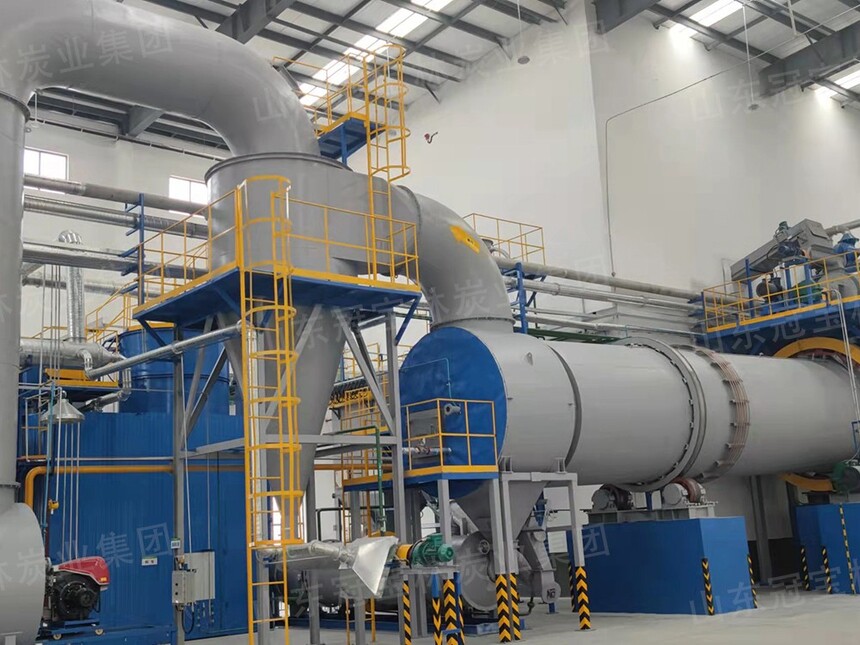
This note sets out what a plant, environmental contractor or carbon producer should define before asking for a powdered activated carbon regeneration system, and how to read the figures published for Guanbaolin's PAC and GAC regeneration units.
1. Describe the spent carbon, not only the fresh carbon
The fresh carbon specification tells the supplier what the material was. The regeneration design depends on what it has become. For a useful first review, describe:
Where it comes from. Pharmaceutical or chemical decolourisation, food and sugar refining, water and wastewater treatment, or another process. Note whether the stream is classed locally as general solid waste or hazardous waste, because that affects permitting, exhaust treatment and where the equipment can be installed.
What it adsorbed. The main organics, solvents or colour bodies, and any inorganic content such as salts, filter aids or metals. Inorganic material does not burn off, so it stays with the regenerated carbon.
Its physical form and moisture. Filter cake, slurry or semi-dry powder, with a measured moisture content. Moisture drives energy demand and the drying step.
How much and how steadily. Average and peak generation, and whether it arrives continuously or in batches.
If a sample is available, a laboratory or pilot test is the most reliable way to confirm what can be recovered before sizing a line. Guanbaolin offers pilot testing and process design for this purpose.
2. Understand what the published yield figure means
Regeneration yield is easy to misread, so compare figures on the same basis.
Guanbaolin's Powdered Activated Carbon Regeneration System lists a capacity of 5–30 t/day and a yield of ≥30% for material at 50% moisture. That figure is stated on wet incoming material: half of a wet filter cake is water before any adsorbed impurities are counted, so the result looks very different from a dry-basis number.
By contrast, the Granular Activated Carbon Regeneration System lists 5–50 t/day and a dry-basis yield of ≥90%, excluding adsorbed impurities.
The two numbers are not a ranking of one technology against the other. They are measured on different bases for different materials. When comparing offers from any supplier, ask each one to state the moisture basis, whether adsorbed impurities are excluded, and how yield will be measured at acceptance.
3. Choose the heat source around your site, not the brochure
The PAC system is described as high-temperature thermal equipment that uses pyrolytic desorption with metered steam input, available in internal-heating and external-heating variants. Listed heat sources are natural gas, electricity, biogas, biomass and fuel oil.
The right option usually depends on what the site already has: a reliable gas supply, spare electrical capacity, biogas from an on-site digester, or biomass fuel nearby. Tell the supplier which utilities are available, their unit prices, and any restrictions on fuel type or combustion emissions in your location. That information shapes both operating cost and the exhaust-treatment design.
4. Treat exhaust handling as part of the scope
Regenerating spent carbon releases the substances it adsorbed. For PAC from chemical or hazardous-waste streams, exhaust treatment is not an accessory; it is part of whether the project can be permitted.
Define early:
the local emission limits that apply to the site,
whether the supplier is expected to include exhaust treatment or tie into an existing system,
how dust from fine powder will be captured and returned or disposed of.
For the GAC system, Guanbaolin notes that integrated exhaust treatment can be included as an optional scope item. Confirm in writing which exhaust equipment is inside the quoted scope for any system you evaluate.
5. Agree on control, staffing and acceptance
Guanbaolin's PAC system uses automated PLC control intended to reduce labour requirements. Even so, ask how many operators per shift are expected, what start-up and shutdown involve, and what training is provided.
Before ordering, agree on how performance will be checked: which properties of the regenerated carbon will be tested (for example adsorption indicators relevant to your process), on what moisture basis, over what run period, and with what feed. A clear acceptance test protects both buyer and supplier.
6. Consider the service route as well
Not every site needs its own furnace. Where volumes are modest, logistics allow, and the waste classification permits transport, an external regeneration service may be worth comparing with on-site equipment. Guanbaolin's regeneration base in Tiemenguan, Xinjiang, operated by Xinjiang Guanbaolin Renewable Energy Co., Ltd., has an approved annual spent-carbon treatment capacity of 15,000 tonnes. Our earlier article on choosing between a regeneration service and on-site equipment covers that decision in more detail.
What to send for a technical review
To get a focused answer rather than a generic brochure, send:
Source process and waste classification of the spent PAC
Adsorbed contaminants and any inorganic content
Form and measured moisture content
Average and peak quantity per day
Available utilities and preferred heat source
Applicable emission limits and site location
Target properties for the regenerated carbon
Whether a sample is available for testing
Guanbaolin supplies activated carbon products, production equipment and regeneration systems, including powdered and granular activated carbon regeneration equipment. Send your project details through the Powdered Activated Carbon Regeneration System page or the contact page and our team will identify the next technical questions.
Related reading:
Previous: None
Next: None