
Activated Carbon for Gold Recovery: What CIP and CIL Buyers Should Confirm
Gold CIP and CIL buyers should specify coarse, hard granular carbon that can be screened from slurry, then confirm mesh, hardness, iodine, ash and COA against Guanbaolin’s published coconut-shell values.
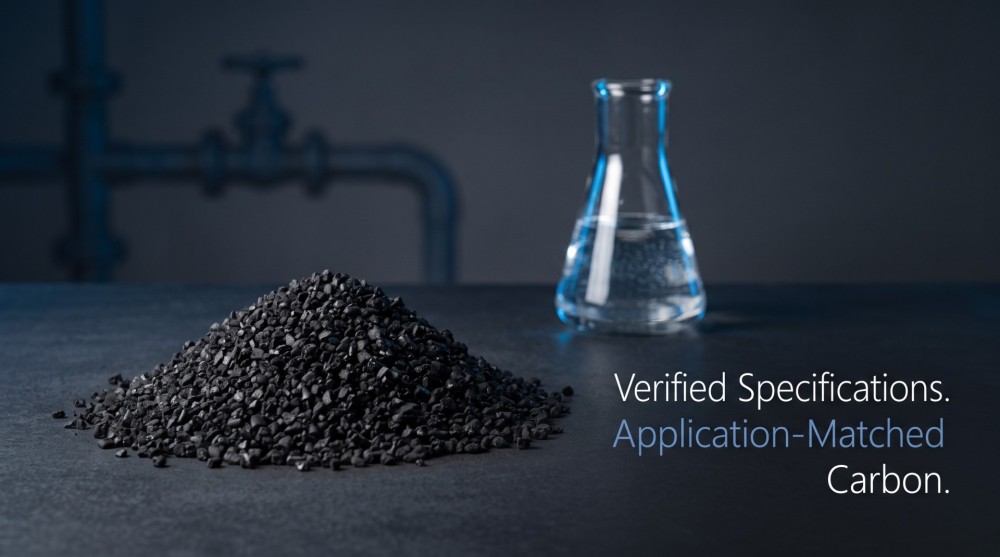
Gold recovery circuits that use carbon-in-pulp (CIP) or carbon-in-leach (CIL) load dissolved gold onto granular activated carbon in a slurry, then screen the carbon out for elution. The grade has to survive agitation and screening, not only show a high laboratory adsorption number. This note walks through what to confirm before you order, using only values Guanbaolin (GBL Carbon) already publishes.
Why gold-circuit carbon is specified differently
In a CIP or CIL train the carbon sits in tanks with ore slurry. It must be coarse enough to screen out of the pulp and hard enough to resist breakdown while it is agitated, pumped and transferred. Guanbaolin’s FAQ states this directly: gold recovery circuits generally need coarse, hard granular carbon that can be screened out of the slurry and withstand abrasion.
Fines generated by attrition leave the circuit with the tailings and take adsorbed gold with them. That is why hardness or abrasion resistance belongs on the enquiry alongside iodine number and mesh, rather than being treated as a secondary packing detail.
A single iodine number does not describe circuit performance. Iodine number is a micropore adsorption indicator measured under specified test conditions. It helps compare grades tested by the same method; it does not predict gold loading, elution behaviour or circuit recovery on its own.
What to review before you compare grades
| Check | Why it matters in CIP/CIL | What Guanbaolin publishes today |
|---|---|---|
| Particle size (mesh) | The granules must be screened from the slurry; finer sizes raise fines risk and change interstage screening | Native coconut-shell GAC is offered in 5–10, 10–24, 24–40, 40–60 and 60–100 mesh. The recommended range for a given circuit is confirmed on inquiry. |
| Hardness / abrasion resistance | Agitation and transfer create fines if the carbon breaks down | Confirmed on inquiry. Ask for the test method so supplier results can be compared on the same basis. |
| Iodine number | One COA field for micropore adsorption under a defined method | Published iodine number for native coconut-shell GAC: 1100–1150 mg/g. Other grades: confirmed on inquiry with the COA. |
| Ash | Part of the agreed specification and can affect handling | Published ash for native coconut-shell GAC: ≤3%. |
| Moisture | Affects payable weight, handling and how the carbon is conditioned before it enters the circuit | Confirmed on inquiry. |
| CTC | Headline vapour-phase indicator; secondary for gold slurry service | Published CTC for native coconut-shell GAC: 82–95%. For CIP/CIL, lead with mesh, hardness and iodine, not CTC alone. |
| Batch documentation | Confirms the delivered lot against the agreed specification | A certificate of analysis (COA) can be requested. Agree whether each value is a typical figure or a guaranteed limit, and which test methods apply. |
Because the FAQ calls for a coarse granule, the coarser published ranges (5–10 and 10–24 mesh) are the natural starting point for a technical discussion. Do not treat either range as a default order size: match mesh to the plant’s interstage screens and confirm the recommendation on inquiry.
Which Guanbaolin grade to open first
Guanbaolin’s Philippine coconut-shell production base publishes gold recovery among the grades it produces, together with drinking-water, food and beverage, VOC and solvent-recovery duties.
The coconut-shell granular activated carbon page is the published native coconut-shell grade buyers can compare today:
Raw material: coconut-shell char (native granules, not powder formed into pellets)
Activation / post-treatment: steam activated; acid-washed, water-washed, dried and screened
Iodine number: 1100–1150 mg/g
CTC: 82–95%
Ash: ≤3%
Mesh: 5–10, 10–24, 24–40, 40–60, 60–100
The same product page lists its published applications as gas-phase VOC treatment, solvent recovery and liquid-phase water treatment. Gold-circuit suitability, hardness and any gold-specific test package are confirmed on inquiry — they are not restated here as published performance claims. Application-specific testing or a pilot review is the reliable way to qualify a grade for a new circuit.
Hardness, bulk density, moisture, pH, surface area, packaging, MOQ and the test standard for this grade are also confirmed on inquiry.
After the carbon is loaded: elution and reactivation
In gold CIP/CIL service the carbon is generally eluted and then thermally reactivated before it returns to the circuit. Guanbaolin approaches spent-carbon regeneration from both sides: a regeneration service at the Xinjiang base (published handling and regeneration capacity of 15,000 t/year) and on-site GAC regeneration systems rated 5–50 t/day.
Recovery after regeneration, iodine recovery and how many cycles a grade can take depend on hardness and the adsorbed load; those figures are confirmed on inquiry. For the choice between a regeneration service and on-site equipment, see Spent Activated Carbon: Regeneration Service or On-Site Equipment?.
Candidate grades can be reviewed through pilot testing and process design in laboratories of approximately 500 m² before a bulk commitment.
What to send for a quotation
That the duty is gold recovery (CIP, CIL or another carbon-adsorption circuit).
Required mesh, or the screen size used to recover carbon from the slurry.
Target iodine number and any hardness, ash or moisture limits, plus the test methods you use to compare suppliers.
Whether each COA value should be a typical figure or a guaranteed limit.
Quantity, packaging preference and destination port.
Whether you also need a sample, a COA with each batch, or a spent-carbon reactivation review.
Samples are available; the buyer pays the courier cost. MOQ and lead time are quoted per order.
Frequently asked questions
Is coconut-shell carbon the grade to use for gold recovery?
Guanbaolin’s FAQ discusses gold recovery in the context of granular coconut-shell carbon, and the Philippine coconut-shell base publishes gold recovery among the grades it produces. The coconut-shell GAC product page’s listed published uses are VOC treatment, solvent recovery and liquid-phase water treatment; gold-circuit suitability is confirmed on inquiry against your mesh, hardness and test methods.
Which mesh should I order for a CIP or CIL circuit?
Match mesh to the interstage screens and the need to recover carbon from the slurry. Native coconut-shell GAC is published in five ranges from 5–10 to 60–100 mesh. Gold circuits generally need a coarse, hard granule; the recommended range for your plant is confirmed on inquiry.
Does a higher iodine number mean better gold recovery?
No. Iodine number is a laboratory micropore indicator under specified test conditions. Compare it only when the test method matches, and treat it as one COA field beside mesh, hardness, ash and moisture. It does not by itself predict gold loading or circuit recovery.
Can gold-circuit carbon be regenerated?
Yes. In CIP/CIL service the carbon is generally eluted and then thermally reactivated. Guanbaolin supplies regeneration equipment and operates a spent-carbon regeneration service (Xinjiang base, published 15,000 t/year capacity). Suitability, recovery and cycle count are confirmed on inquiry.
Next step
Open the coconut shell granular activated carbon page and the FAQ note on mesh for gold recovery, then email Vincentlee@gblcarbon.com or call +86 133 5532 9772 with the circuit type, required mesh, target COA fields and destination port. Or use the contact page.
Previous: None
Next: None