
Activated Coke for COD Adsorption: What to Confirm Before Ordering
Buying anthracite-based activated coke for COD in reclaimed water or wastewater? Confirm the duty, bed service, mesopore requirement and regeneration route before you order.
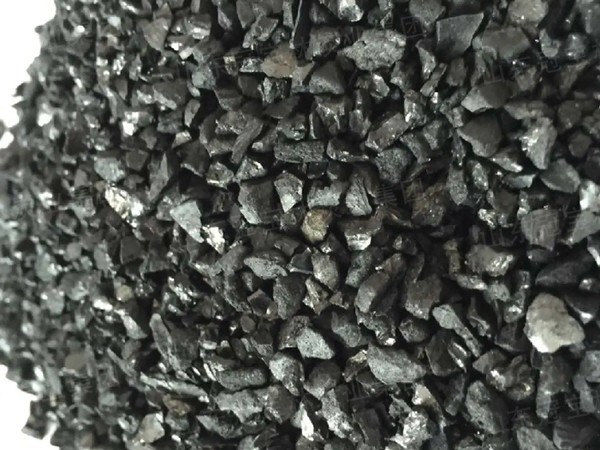
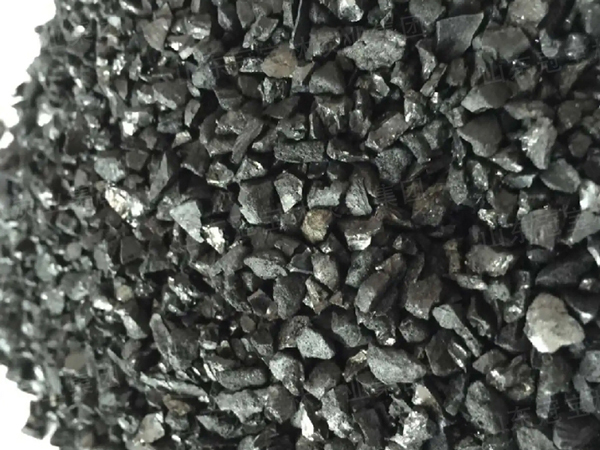
A COD problem in reclaimed water or wastewater is not automatically a granular activated carbon order. Activated coke is a different bed material: it is made for adsorption-bed service, intended to be thermally regenerated, and specified around mesopore volume rather than a drinking-water iodine number. Ordering it as if it were a standard GAC grade leaves the important questions — the duty, the bed, and how spent coke will be restored — until after the material has already been quoted.
This note sets out what a water-treatment plant, EPC contractor or regeneration buyer should confirm before ordering coal-based mesoporous activated coke, using only the figures and descriptions published for Guanbaolin's activated-coke product and its matching regeneration system.
1. Start from the water duty, not from a product name
Guanbaolin's Coal-Based Mesoporous Activated Coke for COD Adsorption is supplied for COD adsorption in reclaimed-water and wastewater treatment. The listed applications include treatment of CODCr, BOD5, colour and colloids. The product page also lists strong nitrogen-removal adsorption performance as a characteristic, without publishing a removal rate.
Before requesting a quotation, write down:
The stream (reclaimed water, industrial wastewater or another source) and where the bed sits in the process
The parameters you need to treat, and whether the duty is CODCr, BOD5, colour, colloids, a nitrogen-related target, or a combination
Typical inlet values and the outlet limits that apply at your site
How those values vary across shifts, seasons or production campaigns
A laboratory or pilot test against your actual water is the safest way to confirm suitability. A product name alone does not replace that check.
2. Treat activated coke as a regenerable bed material
The published product is anthracite-based activated coke, designed for adsorption-bed service with thermal regeneration, and described as having high strength for repeat regeneration. That is a different buying decision from a once-through GAC filter that will be replaced when it is spent.
When you inquire, say:
Whether the coke will run in a fixed adsorption bed and be regenerated
How often you expect to take a bed out of service, if that is already known
Whether spent coke will be regenerated on site or sent away
Any handling, transfer or thermal-cycling conditions that affect mechanical strength
Do not assume that a hardness, abrasion or particle-size figure will appear in a generic catalogue line. Those values should be agreed for the grade actually proposed.
3. Read the published mesopore figure on its own terms
The key published specification is a mesopore volume ratio of ≥40%. Use that figure as a starting point for discussion, not as a stand-alone performance guarantee for your water.
When comparing offers, ask:
Whether the ≥40% mesopore volume ratio applies to the grade being quoted
How that value is measured, and what other pore or quality data will appear on the certificate of analysis
What additional targets you need to set (particle size, strength, moisture, packing or packing method), because those are not published as standard figures on the product page
If a supplier quotes only an iodine number, or treats the coke as interchangeable with drinking-water GAC, ask them to come back to the duty and the mesopore requirement.
4. Plan regeneration at the same time as the material
Because the coke is intended for thermal regeneration, the regeneration route belongs in the same inquiry as the material itself.
Guanbaolin also publishes an Activated Coke Regeneration System for Adsorption Beds. That equipment is described as supporting online regeneration of mesoporous or macroporous activated-coke adsorption beds, using high-temperature internal heating and steam secondary activation. The published capacity is 5–20 t/day. The product page states that combustible gas from the carbon-gas reaction is fully burned to reduce consumption, and that the system is intended to deliver high regeneration quality with compliant exhaust.
If you are considering on-site equipment, define:
The quantity of spent coke to be regenerated, and whether that figure sits inside the published 5–20 t/day range
Whether "online supporting regeneration" is the arrangement you need, or whether coke will be removed from the bed and regenerated separately
Available utilities, including steam, and the exhaust-treatment requirements at the site
How regenerated coke returns to the adsorption bed
If you are considering an off-site regeneration service instead, say so clearly and ask the supplier to confirm that your spent-coke stream can be accepted. Do not assume that a general spent-carbon service automatically covers every coke duty.
5. Send the information needed for a technical review
Guanbaolin's technical review for this product asks for the application or feedstock, required capacity or quantity, target specification, available utilities, destination and project stage. For activated coke, it also helps to attach:
A water-quality summary (inlet and target outlet values for the parameters above)
A simple description of the adsorption bed and how coke will be loaded, unloaded and, if applicable, regenerated
Packing, delivery and destination requirements, if a bulk material order is already in view
With those details, a proposal can be checked against the published product and equipment figures, rather than against a generic carbon price.
Summary checklist
Before ordering activated coke for COD adsorption, prepare:
Stream type, bed position, and the parameters to be treated (CODCr, BOD5, colour, colloids and any nitrogen-related target)
Inlet values, outlet limits, and how they vary in operation
Confirmation that the duty is regenerable adsorption-bed service, not a once-through GAC replacement
Whether the quoted grade meets the published mesopore volume ratio of ≥40%, and which other quality data will be certified
The regeneration route: on-site equipment (published capacity 5–20 t/day) or an off-site service that has been confirmed for your spent coke
Utilities, exhaust requirements, destination, quantity and project stage
A coke order that starts from these points is easier to compare, and less likely to be mistaken for a standard granular activated carbon purchase.
Previous: None
Next: None