
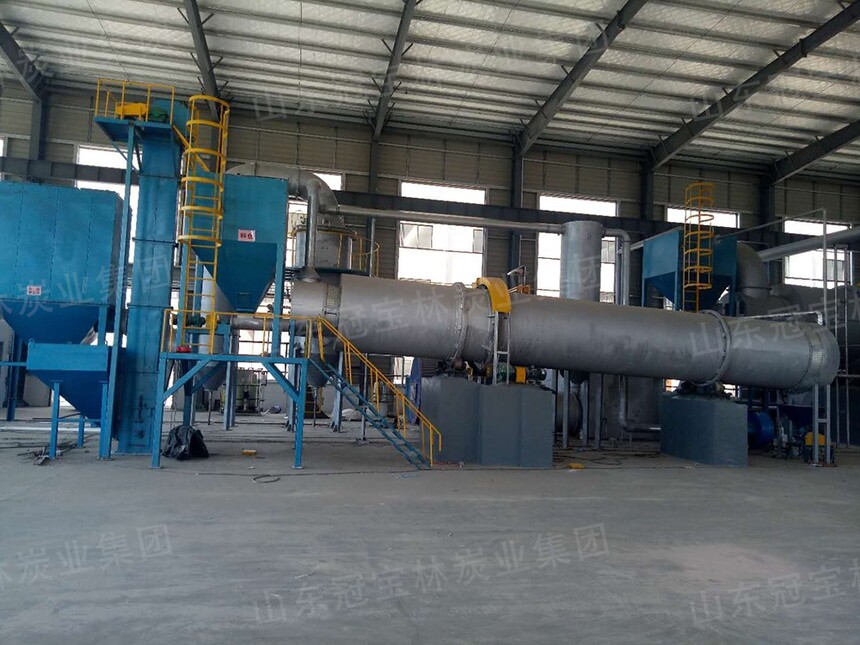
Technical Information
Continuous rotary-kiln carbonization equipment for high-temperature pyrolysis under oxygen-free or oxygen-limited conditions, with internal or external heating options.
Composition or process
- High-temperature pyrolysis and carbonization; internal-heating or external-heating option.
- Combustible gas is generated; some may provide equipment heat and surplus heat may be used for hot water or steam.
What does the rotary-kiln carbonization system do?
GBL describes this system as continuous rotary-kiln equipment for high-temperature pyrolysis under oxygen-free or oxygen-limited conditions. It offers internal-heating or external-heating options. The listed applications include bituminous-coal carbonization or coking, biomass carbonization, and organic-waste carbonization, with sludge and circuit boards given as examples.
How can combustible gas from carbonization be used?
The carbonization process generates combustible gas. GBL states that some of this gas may provide heat for the equipment and that surplus heat may be used for hot water or steam. These are described as possible heat uses, rather than a quantified heat-recovery output for a particular feedstock or project.
Applications
- Bituminous-coal carbonization/coking.
- Biomass carbonization.
- Organic-waste carbonization, including sludge and circuit boards as examples.
Specifications
- Capacity: 3–50 t/day.
Advantages
- Patented equipment with autonomous oxygen-excluding sealing; integrated exhaust treatment meets applicable national emission standards.
Discuss your project requirements
Frequently Asked Questions
What should I send for a technical review?
Provide the application or feedstock, capacity or quantity, target performance, site utilities, and destination. Our team will identify the next technical questions.